
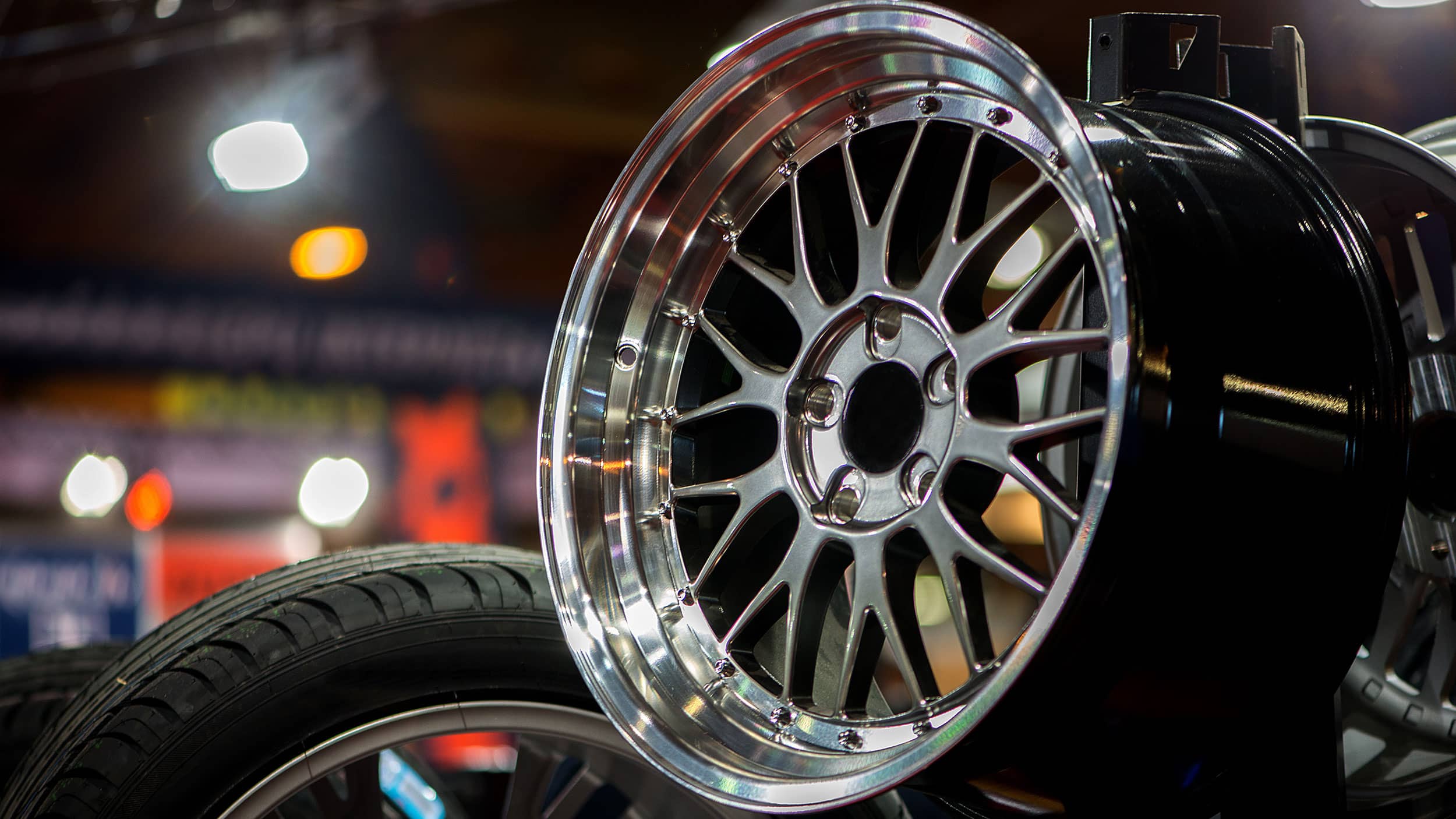
Wheel repair and refurbishment are among the most common services performed in automotive workshops, especially in areas where road conditions can cause damage to wheels. Alloy wheels may become bent after hitting a pothole, striking a curb, or as a result of long-term use.
At FelgiLab we provide professional wheel straightening, alloy wheel refurbishment, and powder coating services that help restore both the appearance and functionality of damaged wheels. On this page you will find answers to the most frequently asked questions about wheel repair, refurbishment, and powder coating. We explain how the repair process works, how long it usually takes, and what factors influence the cost of repairing wheels. You will also learn when repairing a wheel is a good solution and when replacing it may be the safer option.
Common Problems
Wheel Damage
Can a bent wheel be repaired?
Yes, in most cases a bent wheel can be repaired through professional wheel straightening using specialized hydraulic equipment.
During the repair process, the wheel is mounted on a precision machine that identifies the exact location of the deformation. Technicians then gradually restore the wheel’s original shape using controlled pressure. After straightening, the wheel is checked to ensure proper balance and safe operation.
Is it safe to drive with a bent wheel?
Driving with a bent wheel is not recommended because it can cause steering vibrations and affect driving safety.
A bent wheel can lead to uneven tire wear, problems with wheel balancing, and additional stress on suspension components. If you notice vibrations while driving, especially at higher speeds, it is best to have your wheels inspected as soon as possible.
How can you tell if a wheel is damaged?
One of the most common signs of a damaged wheel is steering wheel vibration while driving, especially at speeds above 50–60 mph (80–100 km/h).
Other symptoms may include difficulty balancing the wheel, visible dents on the rim, or slow air loss from the tire. In some cases, cracks or deformation may also be visible on the wheel surface.
Can a wheel bend after hitting a pothole?
Yes, hitting a pothole is one of the most common causes of bent wheels.
Vehicles with large alloy wheels and low-profile tires are particularly vulnerable to this type of damage because the tire provides less cushioning during sudden impacts with road irregularities.
Can alloy wheels crack?
Yes, alloy wheels can crack if they experience a strong impact, such as hitting a curb or a deep pothole.
Cracks most often appear on the inner edge of the wheel. In some cases, the wheel can be repaired using professional aluminum welding, but the possibility of repair depends on the severity and location of the damage.
Can every damaged wheel be repaired?
Not every damaged wheel can be safely repaired.
If a wheel has severe structural damage, large cracks, or extreme deformation, repairing it may not be safe. In such cases, a professional technician may recommend replacing the wheel instead of repairing it.
Repair Process
Wheel Straightening
What is wheel straightening?
Wheel straightening is a process used to restore the original shape of a bent or deformed wheel.
During the procedure, the wheel is mounted on a specialized machine that measures the level of deformation. Using controlled hydraulic pressure, technicians carefully reshape the rim until it returns to its correct form. After the process, the wheel is checked to ensure proper alignment and balance.
Is wheel straightening safe?
Yes, wheel straightening is safe when performed by experienced technicians using professional equipment.
Modern wheel straightening machines allow precise control of the pressure applied to the wheel. This ensures that the wheel can be restored to its original shape without weakening its structural integrity.
How long does wheel straightening take?
Straightening a single wheel usually takes between 30 minutes and a few hours.
The exact time depends on the severity of the damage and the size of the wheel. More complex deformations may require additional adjustments and inspection to ensure the wheel is perfectly balanced.
How much does wheel straightening cost?
The cost of wheel straightening depends on the size of the wheel and the level of damage.
Factors that affect the price include the diameter of the wheel, the material (alloy or steel), and the extent of the deformation. A precise quote is usually provided after the wheel has been inspected or after reviewing photos of the damage.
Wheel Restoration
Wheel Refurbishment
What is wheel refurbishment?
Wheel refurbishment is the process of restoring damaged or worn wheels to their original condition through cleaning, repair, and repainting.
The process usually includes removing old paint, repairing scratches or dents, preparing the surface, and applying a new protective coating such as powder coating. This allows the wheel to regain both its appearance and durability.
Is wheel refurbishment worth it?
Yes, wheel refurbishment is often much more cost-effective than buying new wheels.
This is especially true for larger alloy wheels or premium wheel designs. Professional refurbishment can restore the appearance of the wheels while extending their lifespan, making it a practical and economical solution.
Do refurbished wheels look like new?
In many cases, professionally refurbished wheels can look almost like new.
During the refurbishment process, scratches, curb damage, and worn paint are removed. The wheel is then refinished with a new coating, which restores its original appearance and protects it from future damage.
Does wheel refurbishment remove scratches and curb damage?
Yes, wheel refurbishment typically removes most scratches, curb rash, and surface imperfections.
Before repainting, the wheel surface is carefully repaired and smoothed. This preparation allows the new coating to be applied evenly and helps restore the wheel’s original look.
How long does wheel refurbishment take?
Wheel refurbishment usually takes between one and three working days.
The exact timeframe depends on the condition of the wheels and the amount of repair work required. More complex damage or custom finishes may require additional time.
Wheel Finishing
Powder Coating Wheels
What is powder coating for wheels?
Powder coating is a durable finishing process in which wheels are coated with a dry powder and then cured in a high-temperature oven.
During the process, the powder is electrostatically applied to the wheel surface and then baked to create a strong, even coating. This method produces a smooth finish that is more resistant to damage than traditional paint.
Is powder coating durable?
Yes, powder coating is one of the most durable finishes available for wheels.
The coating is resistant to corrosion, road salt, UV exposure, and small impacts from road debris. Because of its strength and longevity, powder coating is widely used in professional wheel refurbishment.
How much does powder coating wheels cost?
The cost of powder coating wheels depends on the wheel size, condition, and the type of finish selected.
Additional factors may include surface preparation, repair work, and whether multiple colors or special finishes are required. A precise quote is usually provided after inspecting the wheels.
Can you choose different colors for powder coated wheels?
Yes, powder coated wheels can be finished in a wide range of colors and styles.
Common options include gloss black, matte black, metallic finishes, and colors from the RAL palette. This allows drivers to customize the appearance of their wheels to match their vehicle.
Can you powder coat just one wheel?
Yes, it is possible to powder coat a single wheel.
However, in some cases refinishing the entire set may provide a more uniform appearance, especially if the other wheels have visible wear or fading.
Wheel Durability
Regenerated Wheels
How durable are refurbished wheels?
Professionally refurbished wheels can be very durable and suitable for long-term use.
When the refurbishment process is carried out correctly, including proper surface preparation and high-quality coating such as powder coating, the wheel regains both its appearance and protective finish. This helps protect it from corrosion, road salt, and everyday wear.
How long do refurbished wheels last?
Refurbished wheels can last for many years when the work is performed by a professional workshop.
Their lifespan depends on factors such as driving conditions, exposure to road salt, and regular maintenance. With proper care, refurbished wheels can remain in excellent condition for a long time.
Does wheel refurbishment remove corrosion?
Yes, wheel refurbishment includes removing corrosion and preparing the surface for a new protective coating.
During the refurbishment process, corrosion and old paint are removed using techniques such as blasting or sanding. Afterward, a new coating is applied to protect the wheel from further corrosion.
Is it better to refurbish wheels or buy new ones?
In many cases, refurbishing wheels is more cost-effective than buying new ones.
Refurbishment can restore both the appearance and functionality of the wheels at a lower cost. This is especially beneficial for large alloy wheels or premium wheel designs.
Can refurbished wheels increase a car’s resale value?
Yes, refurbished wheels can improve the overall appearance of a vehicle and make it more attractive to potential buyers.
Clean and well-maintained wheels enhance the visual condition of the car, which can positively influence its perceived value during resale.
Wheel Maintenance
Wheel Care
How should you clean alloy wheels?
Alloy wheels should be cleaned regularly using a wheel-safe cleaner and a soft brush or sponge.
Brake dust, road grime, and salt can build up on the wheel surface and damage the finish over time. Gentle cleaning with proper products helps maintain the appearance of the wheels and protects the coating.
Does road salt damage alloy wheels?
Yes, road salt can damage alloy wheels and accelerate corrosion.
During winter, salt and moisture can gradually weaken the protective coating on wheels. Regular washing during the winter season helps remove salt and prevent long-term damage.
How often should wheels be cleaned?
Wheels should ideally be cleaned every one to two weeks, especially if the vehicle is driven frequently.
Regular cleaning removes brake dust and road contaminants that may cause discoloration or damage to the wheel finish.
Can automatic car washes damage wheels?
Automatic car washes are generally safe, but they may not clean wheels as thoroughly as hand washing.
Some harsh brushes or chemicals used in certain car washes can also leave minor scratches or reduce the lifespan of the wheel finish. Hand washing usually provides the best results.
Do refurbished wheels require special care?
Refurbished wheels do not require special maintenance, but regular cleaning is recommended.
Avoid using very aggressive chemicals and keep the wheels free from accumulated brake dust and road salt. Proper care will help preserve the new finish for a long time.
Can you change the color of your wheels?
Yes, the color of your wheels can be changed during the refurbishment or powder coating process.
A wide range of colors and finishes is available, allowing drivers to customize the look of their wheels to match the style of their vehicle. This is a common option during wheel refurbishment.
Can wheels be painted black?
Yes, black is one of the most popular colors for wheel refinishing.
Many drivers choose gloss black, satin black, or matte black finishes to give their vehicle a more modern or sporty appearance.
Can wheels have a matte finish?
Yes, wheels can be finished in matte, satin, or gloss finishes depending on the desired look.
Matte finishes are popular for modern and performance vehicles because they provide a clean and distinctive appearance.
Can wheels be finished in two colors?
Yes, in some cases wheels can be finished in two colors or with custom design details.
This type of customization is often used on performance or luxury vehicles to create a unique appearance.
Can the original factory look of wheels be restored?
Yes, professional wheel refurbishment can often restore wheels to a condition very close to their original factory appearance.
During the process, scratches and old coatings are removed, and a new finish is applied that closely matches the original design of the wheel.
Service Information
Wheel Repair Service
Can I send photos of my wheels for a quote?
Yes, many wheel repair services offer an initial quote based on photos of the damaged wheels.
It is best to send a clear photo of the entire wheel and a close-up image of the damaged area. This helps technicians evaluate the problem and provide an approximate repair estimate.
Do I need to book an appointment for wheel repair?
It is usually recommended to contact the workshop in advance to schedule an appointment.
Booking ahead helps ensure that the technicians can inspect your wheels and complete the repair as quickly as possible.
Do tires need to be removed before wheel repair?
In many cases, tires do not need to be removed before bringing wheels in for repair.
Most professional workshops can handle tire removal and reinstallation if necessary. However, bringing only the wheels may sometimes speed up the repair process.
Can only one wheel be repaired?
Yes, a single wheel can be repaired without any problem.
However, if several wheels have visible damage or wear, refurbishing the entire set may provide a more consistent appearance.
How should wheels be prepared before refurbishment?
Wheels do not require special preparation before refurbishment.
It can be helpful to remove heavy dirt or debris, but professional workshops will fully clean and prepare the wheels as part of the refurbishment process.